



Image by Luke Jen is licensed with Pexels License
Dashboard warning lights are your Jeep’s way of alerting you to potential issues before they become dangerous situations. These small indicators play a huge role in keeping your vehicle running safely and smoothly, and ignoring them can lead to costly breakdowns and unsafe driving conditions. If you’re a Jeep driver, it’s crucial you understand Jeep dashboard symbols and meanings and know how to respond to them.
Check-Engine Light
Your Jeep will warn you about any engine problems with the words “Check Engine,” an image of an engine, or both. If this symbol turns on and remains steady, check the engine soon. If the light is flashing, it’s advisable to pull over and check immediately, as this could indicate the need for urgent attention.
Common reasons this warning light might appear include a loose gas cap, faulty oxygen sensors, worn-out ignition coils and spark plugs, or problems with the mass airflow sensor.
Oil Pressure Warning
If the little oilcan symbol lights up, stop driving and check your oil levels. This warning light signifies low oil pressure, which should be addressed promptly to avoid severe engine damage.
Common causes of low oil pressure include oil pump failure, blocked passages, or clogged pick-up screens. Weak pressure-relief valves or degraded oil can also trigger this warning.
When this light comes on, pull over safely, shut off your engine, and check your oil levels. If they seem correct, but the symbol is still on, don’t restart the engine, as you may have internal problems that need the help of a professional.
Brake Warning
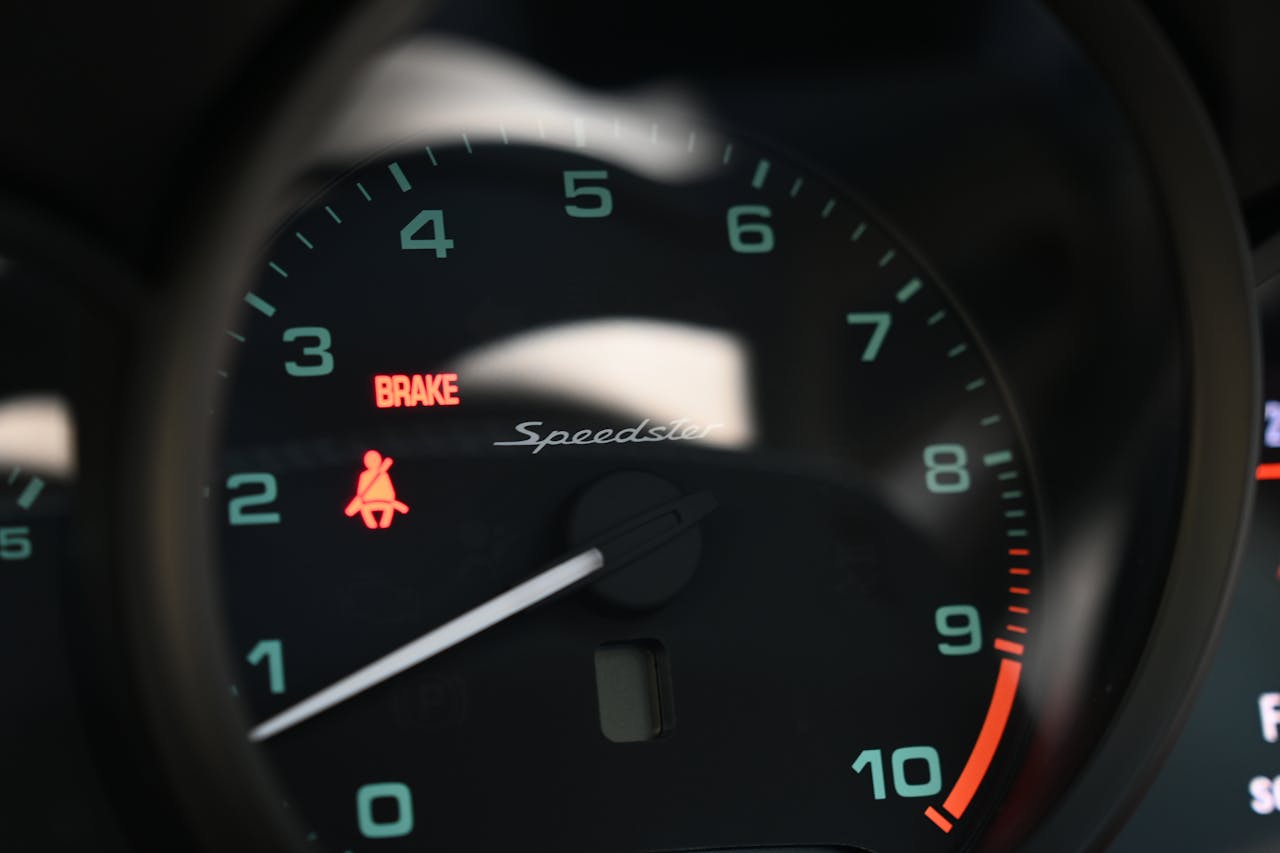
The brake warning shows as the word “BRAKE” or a circle with an exclamation mark. If this lights up, it could signify low fluid levels, worn brake pads, system problems, or an engaged parking brake. If you’re sure that neither the handbrake nor the emergency brake has been engaged, bring your vehicle to a stop as soon as possible and call for help.
Be careful not to confuse the anti-lock braking system (ABS) light with the brake warning light, as they both have completely separate functions. The ABS light signals a problem with wheel-speed sensors, fluid levels, modules, or fuses.
Never ignore brake warnings, especially during Tulsa’s bad weather and storms.
Airbag Warning
The seated figure with a circle in front is the airbag symbol. If this symbol lights up, your safety system could be compromised, and your vehicle should be checked immediately. Reasons the airbag warning light might be activated include sensor problems, damaged wires, or control module issues. Never attempt to modify these systems yourself, as any mistakes can seriously damage your vehicle, trigger deployment, or lead to deployment failure in the event of a crash, potentially putting lives at risk. Drive carefully until you can get it fixed, knowing your safety backup is impaired.
Battery Warning
The battery symbol signifies a problem with the charging system. Your Jeep’s charging setup includes the alternator, battery, drive belts, and wiring. Reasons this warning symbol might light up include alternator failure, loose connections, worn belts, a failing battery, or wiring problems.
If you need to continue driving before getting your battery checked, turn off the air conditioning, radio, and lights if possible to stretch the battery life. Don’t delay in getting help, as charging issues can worsen quickly.
Tire Pressure Monitoring System Indicator
The tire pressure system light resembles an exclamation mark inside a horseshoe shape. If this light is flashing yellow, it indicates underinflation. If the light remains on after adjusting tire pressure to the recommended levels, it may indicate a problem with the sensors and should be checked by a professional mechanic.
Oklahoma’s changing temperatures can affect tire pressure, so it’s always a good idea to check your tires at the start of each season. Proper maintenance saves money and improves safety.
Engine Temperature Indicator
The icon resembling a thermometer warns you that the engine is overheating and shouldn’t be ignored. Reasons this might happen include low coolant levels, leaks, bad water pumps, damaged belts, radiator issues, low oil levels, or a stuck thermostat.
Also look out for other signs, such as hood steam, a sweet coolant smell, burning rubber, and power loss. You may see multiple warning lights glowing at once.
If this warning sign appears, pull over safely, turn off the engine, and wait 15 to 30 minutes before opening the hood. Check the overflow tank after cooling (never remove the radiator cap while hot). If the coolant is low, add to the overflow (your owner’s manual should provide instructions for this), and then have everything checked as soon as possible.
Loose Gas Cap Warning
The loose gas cap warning shows as “GAS CAP” or an icon resembling a gas cap. A loose, damaged, or missing cap can affect emissions control and trigger the check-engine light.
If this light turns on, try completely removing the gas cap and replacing it until you hear a click. If the gas cap light doesn’t go off, it can be reset manually. If this warning sign turns on again even though the cap is secure, seek professional help.
Electric Throttle Control Warning
The electric throttle control (ETC) warning appears as a lightning bolt or “ETC” symbol.
If this warning sign lights up, it could mean throttle body issues, pedal position sensor failures, wiring problems, or computer glitches. You may also notice a change in throttle response, acceleration hesitation, reduced gas mileage, limited power, rough idling, or unpredictable drivability.
ETC problems need professional help, as this system is composed of complex electronics with multiple sensors and computers.
Headlight Indicators
Headlight symbols include regular headlights, high beams (usually blue), and low beams. These symbols turn on when a particular light is in use and are there to inform rather than warn you. If these lights stay on when the light isn’t being used, there may be a glitch in the system, and it’s best to have them checked.
Turn Signal Indicators
Normal turn signal indicators are symbolized with green arrows that blink steadily. Super-fast flashing could mean a burned-out bulb, while jumpy blinking suggests worn switches or wiring problems.
Common problems include total failure (no indicators, clicking, or lights), hazard glitches, and electrical interference.
You can check bulbs and fuses for damage yourself, but problems with relays, switches, or wiring need professional help. Signals are legally required for safety on busy Tulsa roads, so it’s best not to ignore any issues.
Stay Alert and Keep Your Jeep Road-Ready
Understanding your Jeep’s warning lights keeps your family safe on Oklahoma roads and can help you avoid expensive repairs. Regular maintenance is the best way to avoid warning lights, so be sure to check fluids, maintain tire pressure, and schedule regular service.
For warning light diagnosis and Jeep service in Tulsa, visit us at Chris Nikel Chrysler Jeep Dodge Ram FIAT. Our skilled technicians can quickly resolve any issues and get you back on the road safely.
Connect with us


- July 2026
- June 2026
- May 2026
- April 2026
- March 2026
- February 2026
- January 2026
- December 2025
- November 2025
- October 2025
- September 2025
- August 2025
- July 2025
- June 2025
- May 2025
- April 2025
- March 2025
- February 2025
- January 2025
- December 2024
- November 2024
- October 2024
- September 2024
- August 2024
- July 2024
- June 2024
- May 2024
- April 2024
- March 2024
- February 2024
- January 2024
- December 2023
- November 2023
- October 2023
- September 2023
- August 2023
- July 2023
- June 2023
- May 2023
- April 2023
- March 2023
- February 2023
- January 2023
- December 2022
- November 2022
- October 2022
- September 2022
- August 2022
- July 2022
- June 2022
- May 2022
- April 2022
- January 2022
- December 2021
- November 2021
- September 2021
- August 2021
- July 2021
- June 2021
- April 2021
Archives
- 2021 Jeep Wrangler
- Chris Nikel Chrysler Jeep Dodge Ram Fiat Service
- Chrysler Model Features
- Comparisons
- Credit
- Dodge
- Financing
- Holiday
- Jeep Model Features
- Jeep Model Research
- Local
- Local Events
- New Vehicle Features
- RAM
- Ram Model Features
- Ram Model Research
- RAM Towing Tech
- Service
- Service Tips
- Technology
- Tire
- Uncategorized