




The 2025 Jeep Gladiator and the 2025 GMC Canyon stand tall as front-runners in today’s midsize pickup battle. One offers rugged off-road DNA with open-air thrills; the other brings refined comfort with capable performance. At Chris Nikel Chrysler Jeep Dodge Ram FIAT in Broken Arrow, we’ve compiled this real-world comparison to help you pick the perfect partner for your driving needs.
An Overview of Both Models
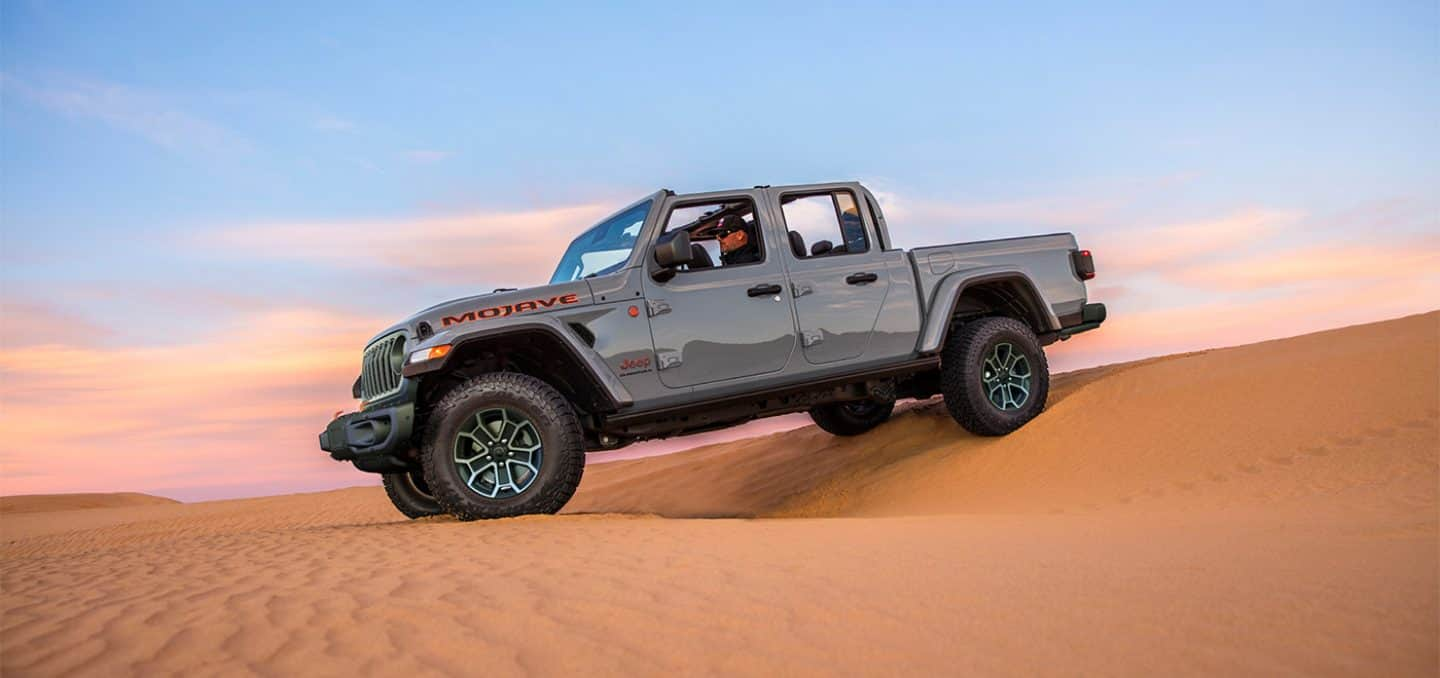
Although the Jeep Gladiator’s and GMC Canyon’s MSRPs start at similar points, the vehicles represent contrasting midsize truck philosophies. The Gladiator embodies Jeep’s heritage with its fully removable doors and roof panels, a feature no competitor offers. It’s a Wrangler with a bed, perfect if you’re an adventure seeker who craves open-air experiences.
The Canyon is the refined option in GMC’s lineup, blending luxury features with truck capability. The Gladiator measures 218 inches long, 75 inches tall, and 73.8 inches wide, making it slightly larger than the Canyon. This size difference helps the Jeep when off-roading but gives the Canyon better urban maneuverability.
The Importance of Choosing the Right Midsize Pickup Truck
Picking the perfect midsize truck isn’t just about looks; it’s about matching a vehicle to your lifestyle. Unlike their bulkier full-size cousins, midsize pickups fit inside standard garages, sip less fuel, and handle more like cars. Your typical driving routes, cargo needs, and adventure plans should guide this decision, not flashy marketing claims.
The Gladiator crushes off-road challenges with its tough-as-nails four-wheel-drive system, while the Canyon delivers a smoother highway ride. Maintenance costs and resale values also deserve consideration before signing that purchase agreement. The right truck becomes your trusted companion for years; the wrong one turns into an expensive mistake within months.
Design and Exterior Features
In appearance and build, a lot separates these two models.
Styling and Aesthetic Differences
The 2025 models couldn’t look more different if they tried. The Gladiator proudly flaunts its Jeep DNA with its iconic seven-slot grille, round headlights, and boxy silhouette. Those removable doors, folding windshield, and three roof options let you customize your connection to the outdoors.
With its sleek, modern aesthetic, the Canyon takes an entirely different approach. Its sculpted body lines, blending toughness with class, complement the bold, statement-making grille. For 2025, GMC introduces its head-turning Nightfall Edition package exclusively for the Canyon’s AT4 trim. While the Gladiator boasts 10 wheel designs and 32- to 33-inch tire options for conquering rough terrain, the Canyon’s wheel choices prioritize highway performance and upscale appearances. These trucks speak different visual languages — one celebrating tradition and ruggedness, the other embracing contemporary styling and refinement.
Build Quality and Materials
These trucks follow different construction approaches. The Gladiator uses a body-on-frame design with a five-link suspension system optimized for off-road articulation. It combines aluminum doors and closures with a steel cargo bed, balancing weight and durability. Trail-ready components come standard, making the Gladiator naturally suited for rough conditions.
The Canyon prioritizes comfort and highway-driving refinement. Its new acoustic laminated windshield significantly reduces road noise during highway driving. Although the Canyon offers a six-year corrosion warranty, one year more than the Gladiator, the latter’s straightforward design simplifies DIY maintenance.
Available Colors and Trim Options
The 2025 Gladiator introduces two fresh hues, ‘41 and Fathom Blue, alongside returning favorites such as Bright White and Firecracker Red. Jeep offers eight Gladiator trims: the base Sport, the Sport S (adding comfort features), the Nighthawk, the Willys (with retro styling cues), the Mojave (desert-tuned suspension), the Mojave X, the Rubicon (maximum off-road capability), and the Rubicon X. Each trim lets you tailor your truck to match specific needs and style preferences.
GMC counters with its own color expansion for 2025, adding Glacier Metallic, Desert Sun, and Rapids Metallic to the Canyon palette. The trim lineup includes the value-oriented Elevation, the off-road-focused AT4, and the top-tier Denali, each targeting different priorities. Both manufacturers understand that truck owners view their vehicles as extensions of their personalities, hence the wide range of appearance options. Whether you want subtle sophistication or trail-ready toughness, both trucks offer visual customizations to match your style.
Performance and Capability
Engine choices, fuel economy, and towing capacities reveal similarities and contrasts.
Engine Options and Specifications
The Gladiator features Jeep’s 3.6-liter Pentastar V-6, generating 285 horsepower and 260 lb-ft of torque. It pairs with an eight-speed automatic transmission. This engine includes start-stop technology that you can disable with a button press. This naturally aspirated V-6 offers straightforward power without forced induction complexities, achieving 0 to 60 mph in 7.2 seconds.
The Canyon employs a 2.7-liter turbocharged four-cylinder engine that delivers 310 horsepower and 430 lb-ft of torque and also pairs with an eight-speed automatic transmission. It reaches 60 mph in 6.8 seconds. While the turbo provides strong performance, you might favor the Jeep’s simpler engine design with its longer-term reliability.
Fuel Economy
The Canyon’s most fuel-efficient version, the rear-wheel-drive Elevation, earns EPA ratings of 19 mpg city and 23 mpg highway. With four-wheel traction, those numbers dip slightly to 18 mpg city/22 mpg highway. The Canyon is among the more fuel-friendly options in the midsize truck category, though it’s far thirstier than typical sedans or crossovers.
The Gladiator trails narrowly at 17 mpg around town and 22 mpg on open roads, which are respectable numbers considering its boxy shape and off-road focus. Real-world results will vary dramatically with your driving style and cargo load and depend on the presence or absence of roof panels.
You may accept the Gladiator’s slightly higher fuel costs as a trade-off for its unique open-air experience and trail capability, but if you’re a daily commuter covering serious mileage, those miles-per-gallon differences could add up to hundreds of dollars annually. You’ll see low economy from both trucks if you’re a lead-footed driver hauling heavy loads.
Towing and Payload Capacities
Both trucks bring impressive towing muscle. A properly equipped Gladiator can drag 7,700 pounds, rivaling some full-size pickups from a generation ago. Its payload rating hits 1,725 pounds, meaning anything fitting in the bed shouldn’t stress the suspension. This capacity makes the Jeep suitable for work duties and recreational hauling, whether moving construction materials or pulling a camper for weekend getaways.
The GMC Canyon matches the Jeep’s maximum 7,700-pound tow rating across the Elevation, AT4, and Denali trims, though its payload capacity is a little lower at 1,640 pounds. Both trucks offer helpful towing aids, including trailer sway control and optional integrated brake controllers, which keep things stable when pulling heavy loads. Remember that achieving these maximum ratings typically requires specific configurations and optional equipment; the base models won’t hit these peaks without adding towing packages.
Test-Drive the 2025 Gladiator at Chris Nikel Chrysler Jeep Dodge Ram FIAT
Although choosing between the 2025 Jeep Gladiator and the 2025 GMC Canyon depends on your priorities, the former has the overall edge despite its slightly lower miles-per-gallon figures. But specs alone don’t tell the whole story. To discover what sets the 2025 Gladiator apart, visit our Broken Arrow, Oklahoma, dealership or contact us to schedule a test-drive. Our team will help you find the right truck configuration without any sales pressure.
Connect with us


- July 2026
- June 2026
- May 2026
- April 2026
- March 2026
- February 2026
- January 2026
- December 2025
- November 2025
- October 2025
- September 2025
- August 2025
- July 2025
- June 2025
- May 2025
- April 2025
- March 2025
- February 2025
- January 2025
- December 2024
- November 2024
- October 2024
- September 2024
- August 2024
- July 2024
- June 2024
- May 2024
- April 2024
- March 2024
- February 2024
- January 2024
- December 2023
- November 2023
- October 2023
- September 2023
- August 2023
- July 2023
- June 2023
- May 2023
- April 2023
- March 2023
- February 2023
- January 2023
- December 2022
- November 2022
- October 2022
- September 2022
- August 2022
- July 2022
- June 2022
- May 2022
- April 2022
- January 2022
- December 2021
- November 2021
- September 2021
- August 2021
- July 2021
- June 2021
- April 2021
Archives
- 2021 Jeep Wrangler
- Chris Nikel Chrysler Jeep Dodge Ram Fiat Service
- Chrysler Model Features
- Comparisons
- Credit
- Dodge
- Financing
- Holiday
- Jeep Model Features
- Jeep Model Research
- Local
- Local Events
- New Vehicle Features
- RAM
- Ram Model Features
- Ram Model Research
- RAM Towing Tech
- Service
- Service Tips
- Technology
- Tire
- Uncategorized