




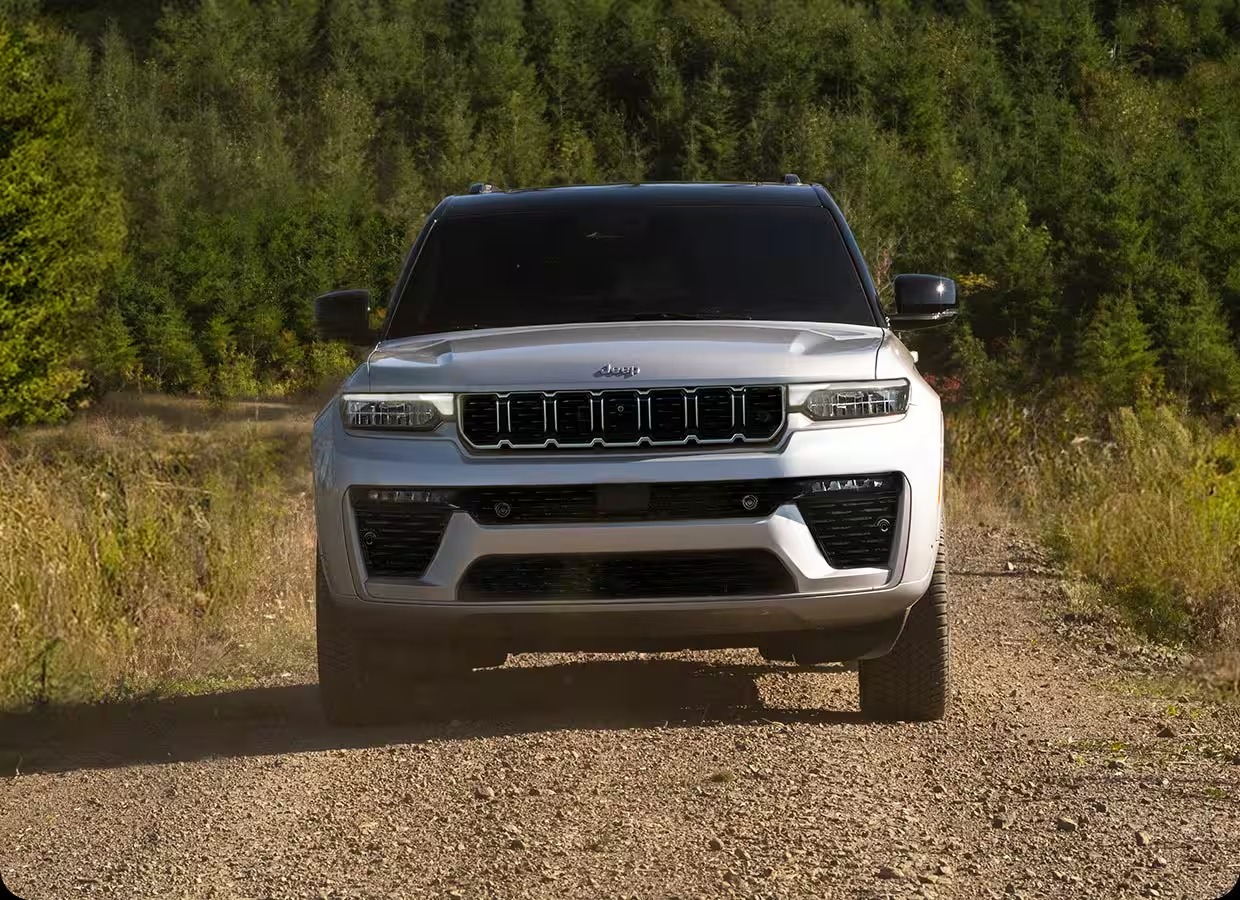
Shopping for a midsize SUV that handles everything from school runs to weekend lake trips? The 2026 Jeep Grand Cherokee vs. Toyota Highlander debate dominates conversations among Oklahoma families for good reason. Both deliver strong credentials, but they approach the mission with completely different philosophies.
The Grand Cherokee brings legendary capability and serious towing muscle to the table. Meanwhile, the Highlander counters with impressive fuel economy and family-focused practicality. Let’s break down which SUV deserves a spot in your driveway.
2026 Jeep Grand Cherokee vs. Toyota Highlander: Quick Specs Comparison
Understanding what each SUV actually delivers starts with the numbers. The Jeep dives headfirst into its rugged heritage with capability-focused engineering. The Toyota prioritizes family-friendly practicality and efficiency.
Feature | 2026 Jeep Grand Cherokee | 2026 Toyota Highlander |
Engine | 3.6L V6, 293 hp | 2.5L hybrid, 240 hp |
Seating capacity | 5 seats (2-row); 7 seats available in Grand Cherokee L (3-row) | 7 seats |
Towing capacity | Up to 6,200 lbs | Up to 5,000 lbs |
Ground clearance | Up to 11.0 inches (with available off-road setup) | Approximately 8.0 inches |
Fuel economy (city/hwy) | 19/26 MPG (EPA-estimated) | 22/29 MPG (EPA-estimated) |
Safety features | Over 110 standard and available safety/security features incl. night vision and 360° camera | Includes Secondary Collision Brake and family-focused safety tech |
Cargo space (max) | 70.8 cu ft (≈ 2,005 L) max in 2-row Grand Cherokee; 84.6 cu ft (≈ 2,395 L) max in 3-row Grand Cherokee L | Up to 2,761 L maximum cargo volume (with rear seats folded) |
Drive type | 4WD or AWD available, off-road capable | FWD or AWD available, tuned for on-road comfort |
Both offer multiple trim levels that let you dial in exactly what matters most. Pricing starts competitively for both, though the Grand Cherokee often edges slightly lower at the base level. The Highlander typically bundles more standard features into its entry trim, which can shift the value equation depending on your priorities.
Performance and Capability: Built for Oklahoma Adventures
Powertrain Options and Engine Performance
The Grand Cherokee compared to Highlander reveals a clear performance advantage for Jeep. The Grand Cherokee’s 3.6L V6 delivers 293 horsepower, providing confident acceleration whether you’re merging onto the Creek Turnpike or passing slower traffic. That 53-horsepower advantage over the Highlander’s 240-hp hybrid translates to noticeably stronger performance when you need it.
Toyota’s hybrid approach prioritizes efficiency over muscle. The Highlander provides adequate acceleration for daily driving but lacks the Grand Cherokee’s raw power. Both feature advanced transmissions that smooth out power delivery, they’re just tuned for completely different driving personalities.
Towing Capacity for Boats, Trailers, and Weekend Getaways
Here’s where the Jeep vs Toyota SUV comparison diverges dramatically. The Grand Cherokee’s 6,200-lb towing capacity absolutely dominates the Highlander’s 5,000-lb rating. For Oklahoma families hauling boats to Grand Lake or pulling campers to Beavers Bend State Park, that extra 1,200 pounds matters significantly.
The Highlander handles lighter towing duties adequately. Weekend trips with a small utility trailer won’t stress it. But families with serious hauling needs will quickly bump against the Highlander’s limitations. The Grand Cherokee’s robust frame and powerful engine options let you load up without worrying about performance degradation.
Off-Road Readiness and All-Weather Capability
The Grand Cherokee’s 11 inches of ground clearance versus the Highlander’s approximate 8 inches makes a tangible difference on unpaved roads. Jeep builds the Grand Cherokee with legitimate off-road credentials, including advanced four-wheel-drive systems and terrain management modes. Whether you’re navigating muddy ranch roads or tackling rough terrain, the Jeep’s capability shines.
Toyota focuses on all-weather competence rather than hardcore off-roading. The Highlander’s available all-wheel drive handles rain, snow, and maintained gravel roads confidently. It’s engineered for adverse conditions on established roads, not serious trail running. For families who venture beyond pavement regularly, the Grand Cherokee’s advantage becomes obvious.
Interior Space and Family Comfort Face-Off
Seating and Passenger Accommodations
The standard two-row Grand Cherokee seats five, while the three-row Grand Cherokee L accommodates seven like the standard Highlander. The Highlander typically offers slightly more overall passenger space, particularly beneficial for taller families or growing teenagers. Three adults can sit comfortably in the second row during longer drives.
The Grand Cherokee counters with premium materials and upscale finishes. The cabin feels more luxurious, with attention to detail that elevates every drive. Thoughtful touches like strategically placed charging ports and accessible climate controls keep everyone comfortable.
Third-row access differs significantly. The Highlander makes getting to the back seats easier, important when loading kids and car seats multiple times daily. The Grand Cherokee L’s third row works better for occasional use or smaller passengers. Both fold flat when you need maximum cargo space.
Cargo Versatility and Storage Solutions
The Highlander’s maximum cargo capacity (2,761 liters with all seats folded) exceeds both the standard Grand Cherokee (2,005 liters) and Grand Cherokee L (2,395 liters). But raw numbers don’t tell the whole story. Both SUVs handle typical Costco runs and weekend camping gear, though the Highlander’s smart storage compartments and flexible seating configurations make daily organization easier.
The Grand Cherokee counters with a more sophisticated power liftgate and available hands-free operation on upper trims. Families juggling groceries and kids will appreciate either approach, depending on whether maximum volume or premium operation matters more.
Technology and Safety Systems Compared
Infotainment and Connectivity Features
Modern families live connected, and both SUVs deliver capable systems. Jeep typically offers larger touchscreen displays and more premium audio options on comparable trims. The system looks sharp and sounds impressive, with crisp graphics and responsive controls.
Toyota emphasizes intuitive operation. The Highlander’s interface feels immediately familiar, with logical menu structures that don’t require pulling over to figure out. Both support Apple CarPlay and Android Auto, keeping smartphones integrated seamlessly. Multiple USB ports throughout the cabin mean everyone’s devices stay charged during longer trips.
Voice controls work reliably in both vehicles. Navigation systems guide you confidently through construction zones or unfamiliar roads, while various entertainment options keep passengers occupied.
Advanced Safety and Driver Assistance
The Grand Cherokee offers over 110 standard and available safety and security features, including advanced options like night vision and a 360-degree camera system on upper trims. These technologies boost driver confidence when navigating tight parking lots or backing out of crowded driveways.
The Highlander includes Secondary Collision Brake technology and bundles more standard driver assistance features across its lineup. Adaptive cruise control, lane-keeping assist, and automatic emergency braking come standard on more trim levels. Both manufacturers take safety seriously, with strong IIHS testing results, they just package features differently across their model ranges.
Fuel Economy and Ownership Costs
Here’s where the Highlander pulls ahead decisively. Toyota’s hybrid engineering delivers EPA-estimated ratings of 22/29 MPG (city/highway) compared to the Grand Cherokee’s 19/26 MPG. For families commuting from Broken Arrow to downtown Tulsa daily, those savings add up quickly. Lower fuel costs over years of ownership can offset a higher initial purchase price.
The Grand Cherokee trades some efficiency for performance and capability. You’ll visit gas stations more frequently, but many drivers consider that a fair exchange for the power and towing capacity. Calculate your typical driving patterns and fuel costs to see which approach fits your budget better. Both vehicles maintain their value reasonably well in the resale market.
Trim Levels and Pricing: Finding Your Perfect Match
Both manufacturers offer multiple trim levels with different feature sets. Base models deliver solid value, though they emphasize different priorities. The Grand Cherokee often starts slightly lower but can climb quickly with options. The Highlander bundles more into base trims, potentially offering better initial value.
Mid-range trims typically hit the sweet spot for most families, delivering key features without stretching into luxury territory. Compare trim levels carefully because names don’t align directly between brands. What Jeep considers mid-level might correspond to a completely different Toyota tier.
Top trims from both manufacturers deliver genuine luxury with premium leather, advanced audio systems, and comprehensive tech packages. Decide which features genuinely enhance your daily life versus those that just sound impressive.
The Verdict: Which SUV Fits Your Tulsa Lifestyle?
The Jeep Grand Cherokee vs Toyota Highlander decision ultimately reflects your priorities. Choose the Grand Cherokee if you value performance, towing capacity, and off-road capability. It’s built for families who actually use their SUV’s adventure credentials. The 6,200-lb towing capacity, 293-horsepower V6, and 11 inches of ground clearance make real differences when hauling boats or navigating rough terrain.
The Highlander wins if fuel economy, third-row seating, and maximum cargo space top your list. It excels at the school-sports-errands routine that defines family life, and the hybrid option appeals to environmentally conscious drivers watching fuel budgets.
For Oklahoma families who regularly venture beyond pavement, tow recreational equipment, or simply want the confidence that comes with genuine capability, the Grand Cherokee’s engineering advantages make it the stronger choice.
Test Drive Both SUVs at Chris Nikel CJDR Fiat in Tulsa
Reading comparisons helps narrow your choices, but nothing beats experiencing both SUVs yourself. Chris Nikel CJDR Fiat serves Tulsa and Broken Arrow with a straightforward, no-pressure approach that’s earned trust since 1973. Our team understands Oklahoma families need SUVs that perform in real-world conditions, not just showroom floors.
Schedule test drives with us to experience the differences firsthand. Browse our current Grand Cherokee inventory to see available colors, trims, and features. Bring your family along to check seating comfort. Load your typical cargo to test practicality. Drive your actual commute route to feel how each SUV handles your daily reality.
Our experienced staff can walk you through trim options, financing solutions, and customization possibilities. Contact us today to schedule your test drive at 2920 N Aspen Ave, Broken Arrow, OK 74012, or call 539-766-8990. Our full-service facility and well-stocked parts department mean our relationship continues long after purchase, ensuring your chosen SUV stays adventure-ready for years ahead.
Connect with us


- July 2026
- June 2026
- May 2026
- April 2026
- March 2026
- February 2026
- January 2026
- December 2025
- November 2025
- October 2025
- September 2025
- August 2025
- July 2025
- June 2025
- May 2025
- April 2025
- March 2025
- February 2025
- January 2025
- December 2024
- November 2024
- October 2024
- September 2024
- August 2024
- July 2024
- June 2024
- May 2024
- April 2024
- March 2024
- February 2024
- January 2024
- December 2023
- November 2023
- October 2023
- September 2023
- August 2023
- July 2023
- June 2023
- May 2023
- April 2023
- March 2023
- February 2023
- January 2023
- December 2022
- November 2022
- October 2022
- September 2022
- August 2022
- July 2022
- June 2022
- May 2022
- April 2022
- January 2022
- December 2021
- November 2021
- September 2021
- August 2021
- July 2021
- June 2021
- April 2021
Archives
- 2021 Jeep Wrangler
- Chris Nikel Chrysler Jeep Dodge Ram Fiat Service
- Chrysler Model Features
- Comparisons
- Credit
- Dodge
- Financing
- Holiday
- Jeep Model Features
- Jeep Model Research
- Local
- Local Events
- New Vehicle Features
- RAM
- Ram Model Features
- Ram Model Research
- RAM Towing Tech
- Service
- Service Tips
- Technology
- Tire
- Uncategorized