




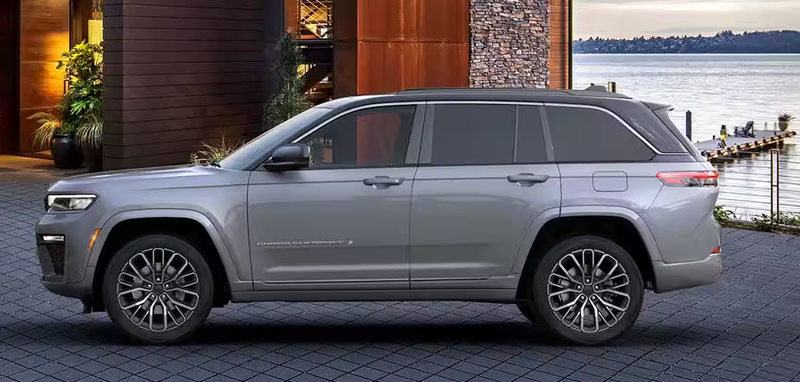
Cross-shopping the 2026 Jeep Grand Cherokee vs Toyota 4Runner comes down to how you drive week to week. Some buyers want a refined daily driver that can still handle a trail on the weekend. Others want a proven off-roader built to outlast everything else on the road. If you're weighing these two around Tulsa or Broken Arrow, we can help you compare them side by side. Browse our current new inventory or keep reading to see which one lines up with your lifestyle.
Design and Body Structure: Refined Unibody vs. Rugged Body-on-Frame
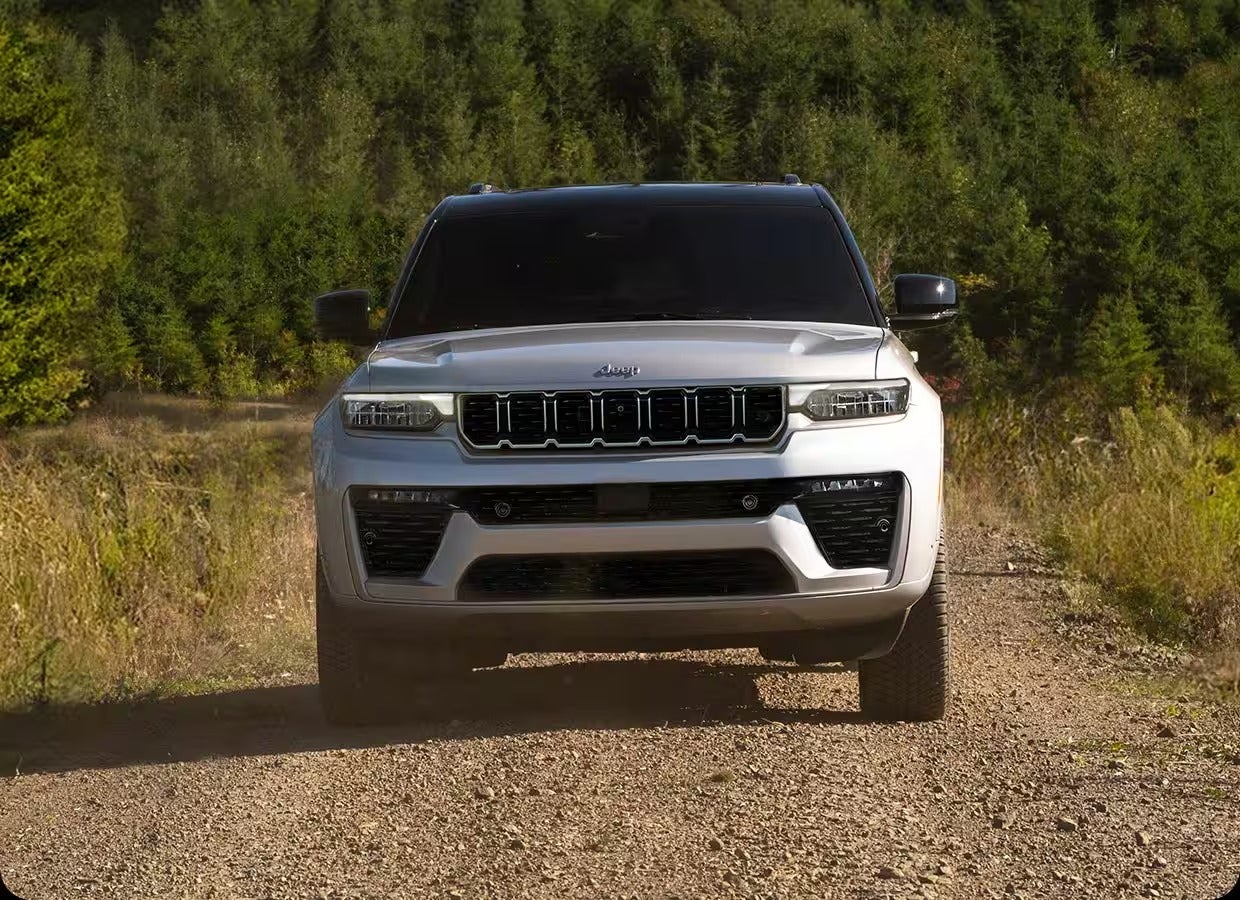
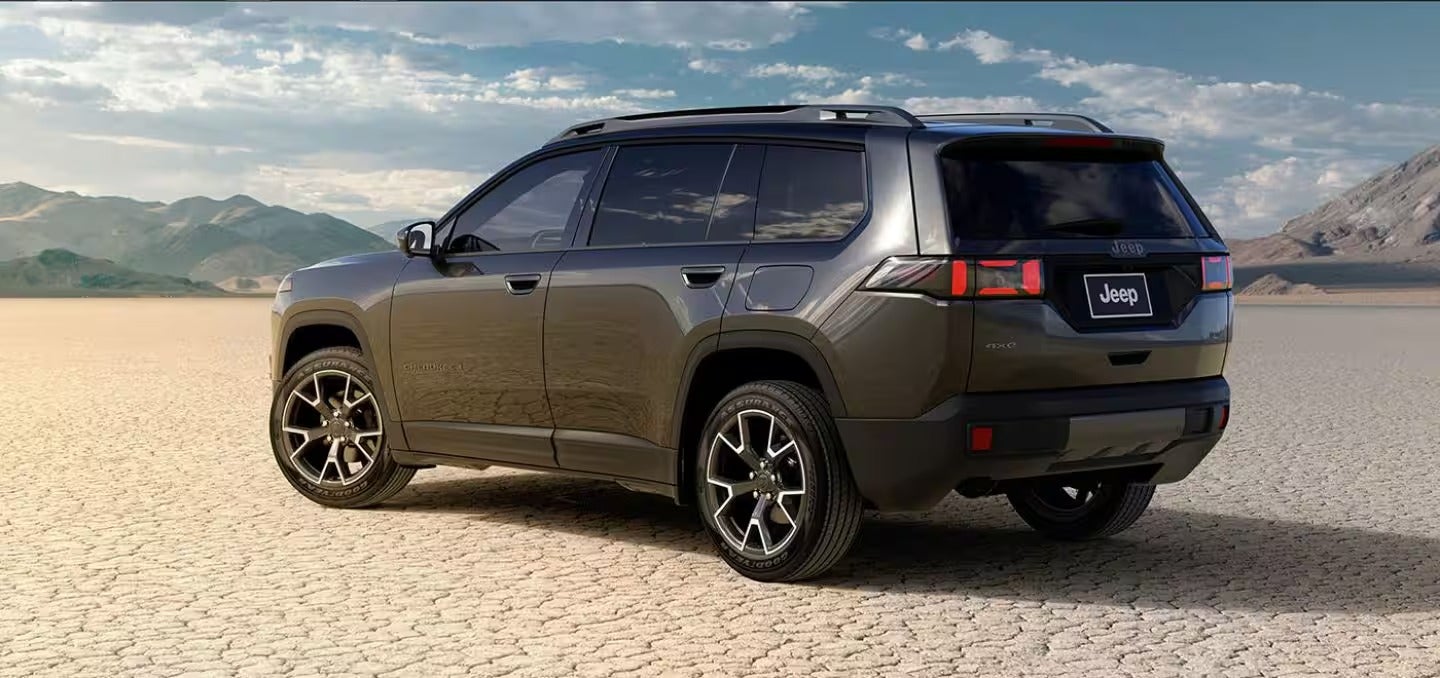
The Grand Cherokee rides on a unibody platform tuned for on-road comfort, quiet cabin manners, and confident handling. The 2026 refresh brings a new front fascia, redesigned grille, updated LED headlamps, and an available hands-free power liftgate, along with upgraded interior materials that lean upscale.
The 4Runner takes the opposite approach. Its sixth generation moves to Toyota's TNGA-F platform but keeps traditional body-on-frame construction with a high-strength steel frame, the same formula that's made the 4Runner a trail-riding staple for decades. Inside, the cabin gets a Tacoma-inspired horizontal dash layout with wipe-clean, durable surfaces built to handle mud and gear day after day.
That single structural difference, unibody refinement against body-on-frame toughness, shapes almost everything else in this comparison.
Powertrain Options and Performance
The specs that actually affect your daily drive break down like this.
Jeep Grand Cherokee Engine Lineup
The 2026 Grand Cherokee lineup spans six trims: Laredo, Laredo X, Laredo Altitude, Limited, Limited Reserve, and Summit. Power comes from two engines:
The 3.6L Pentastar V6 produces 293 hp and returns up to 26 mpg highway, standard on Laredo and Laredo X.
The 2.0L Hurricane 4 Turbo makes 324 hp with EPA estimates of 21 city and 27 highway mpg, and the Grand Cherokee's best-in-class range tops out at 529 miles thanks to a new Gen IV transmission.
Toyota 4Runner Engine Lineup
The 4Runner counters with two turbocharged options of its own:
The 2.4L i-FORCE turbo generates 278 hp and 317 lb-ft, paired with an 8-speed automatic.
The i-FORCE MAX hybrid combines a 48-hp electric motor with a 1.87-kWh battery for 326 hp and 465 lb-ft, with peak torque arriving around 1,700 rpm. The Trailhunter trim specifically is rated at 323 hp. The hybrid comes standard on TRD Pro, Trailhunter, and Platinum, and is available on TRD Off-Road, TRD Off-Road Premium, and Limited.
Both automakers clearly moved toward turbocharged, torque-rich engines for 2026. Toyota's hybrid setup leans into low-end grunt, while Jeep's Hurricane 4 favors range and daily efficiency.
Off-Road Capability and Terrain Management
Grand Cherokee Trailhawk Capability
The Trailhawk trim isn't part of the 2026 Grand Cherokee lineup. It was discontinued alongside the cancellation of the 4xe hybrid, and while it's expected to return, likely as a 2027 model, buyers shopping today should focus on what's actually available now.
That's still a lot. The 2026 lineup offers Quadra-Trac I, Quadra-Trac II, and Quadra-Drive II with a rear electronic limited-slip differential, plus available Quadra-Lift Air Suspension and Selec-Terrain modes covering Auto, Sport, Rock, Snow, and Mud/Sand. That's a genuinely capable setup for gravel roads outside Tulsa or a muddy trailhead after an Oklahoma storm, even without a dedicated off-road trim this year.
4Runner TRD Pro and Off-Road Heritage
The 4Runner's off-road identity runs deep, and ground clearance varies noticeably by trim: 8.1 inches on the SR5, 9.1 inches on the TRD Off-Road, and 10.1 inches on the TRD Pro and Trailhunter. Every trail-focused trim adds an electronic locking rear differential, Multi-Terrain Select, and Crawl Control.
The TRD Off-Road uses Bilstein monotube shocks with 33-degree approach and 24-degree departure angles, while the TRD Pro steps up to FOX QS3 shocks and a Stabilizer Disconnect Mechanism, also found on the Trailhunter and, new for 2026, optional on the i-FORCE MAX TRD Off-Road Premium.
An available Multi-Terrain Monitor displays on a 14-inch touchscreen, and the TRD Pro's IsoDynamic performance seats are exclusive to that trim. If off-roading is your primary use case rather than an occasional weekend activity, the 4Runner's dedicated trail trims have a real edge right now.
Towing Capacity and Cargo Versatility
Towing numbers matter if you've got a boat or camper waiting in the driveway. The Grand Cherokee tows up to 6,200 lb with either engine and in either 2WD or 4WD, a figure Jeep calls best in class. Cargo space behind the rear seats is rated at 37.7 cu ft, expanding to 70.8 cu ft max, and the extended Grand Cherokee L offers 17.2 cu ft behind the third row, 84.6 cu ft max, and seating for up to seven. Manufacturer cargo figures are measured floor to ceiling, so it's worth bringing your bulkiest gear along on the test drive rather than trusting the number alone.
The 4Runner tows up to 6,000 lb when properly equipped, backed by an integrated hitch and an available Tow Technology Package. Cargo space tops out around 90.2 cu ft on two-row, non-hybrid trims (82.6 cu ft max on hybrid models like the TRD Pro and Trailhunter), with an exterior footprint of 194.9 inches long by 77.9 inches wide.
The Grand Cherokee edges ahead on towing capacity, while the 4Runner offers more outright cargo room. Either way, budget questions are easy to sort out. Apply for financing or browse our current inventory to see what fits your plans and your monthly payment.
Interior Comfort, Technology and Family Utility
Inside, the Grand Cherokee runs Uconnect 5 standard across every trim, with an 8.4-inch display on Laredo and Laredo X, and a 12.3-inch navigation display on Laredo Altitude, Limited, Limited Reserve, and Summit. Wireless Apple CarPlay and Android Auto are standard, and an optional 10.25-inch passenger-side screen is available. The Summit trim adds an exclusive 19-speaker McIntosh audio system and a Front Passenger Interactive Display. Three-row Grand Cherokee L trims seat up to seven.
The 4Runner sticks to a more practical setup: an 8-inch touchscreen, 7-inch digital driver display, 8 speakers, wireless CarPlay and Android Auto, and USB-C ports are standard, with a 14-inch touchscreen and 12.3-inch digital cluster available on upper grades. Available third-row seating accommodates up to seven on the non-hybrid SR5 and Limited trims, and an available hands-free power liftgate adds convenience for hauling kids and gear.
The Grand Cherokee pulls ahead if premium cabin tech and materials matter most to you. But the 4Runner holds its own for buyers who want a durable, low-fuss interior that shrugs off muddy boots.
Safety Features and Driver-Assist Systems
The Grand Cherokee comes standard with forward collision warning, automatic emergency braking, blind spot detection, and lane management. Active Driving Assist is standard on Laredo Altitude, Limited, Limited Reserve, and Summit trims, and the available Night Vision system can be added from the Limited on up. Hands-Free Active Driving Assist with driver-attention monitoring is also available. NHTSA has awarded the Grand Cherokee a five-star overall safety rating.
The 4Runner comes standard with Toyota Safety Sense 3.0, which includes a Pre-Collision system with Pedestrian Detection, Full-Speed Dynamic Radar Cruise Control, Proactive Driving Assist, improved lane recognition, motorcyclist detection, and an upgraded automatic emergency stop function. It also offers a digital key and an available Card Key.
Both SUVs take driver-assist tech seriously, and families cross-shopping either one won't be settling for less.
Durability, Reliability and Long-Term Ownership
This is where the 4Runner has earned its reputation. It tied with the Buick Enclave for the top spot in the upper midsize SUV segment of the 2026 J.D. Power U.S. Vehicle Dependability Study, and it's common to see units on the road with well over 200,000 miles. One caveat worth knowing: that study surveys owners of 2023 vehicles after three years, so the score belongs to the previous-generation 4Runner with its V6, not the redesigned turbo and hybrid model sitting on lots today.
The Grand Cherokee's story is more nuanced, and we'd rather give it to you straight than cherry-pick numbers. J.D. Power gives the Grand Cherokee a predicted reliability score of 81 out of 100, landing in the "Great" tier, while Consumer Reports predicts below-average reliability for the model. It's backed by a 3-year/36,000-mile limited warranty and a 5-year/60,000-mile powertrain warranty, and our certified CJDR/FIAT technicians keep Grand Cherokees running strong using genuine Mopar OEM parts, whether that's routine maintenance or bigger repairs down the road.
Both vehicles are solid long-term bets. The 4Runner leads on pure dependability data, while the Grand Cherokee backs its warranty with a full-service Mopar parts and service team ready to support you for years.
Which SUV Matches Your Lifestyle?
Your answer in the 2026 Jeep Grand Cherokee vs Toyota 4Runner debate really depends on how you actually live day to day.
Choose the Grand Cherokee If You Want Refined Comfort
If your weekends mix family errands with the occasional gravel road, the Grand Cherokee makes a strong case, with Uconnect 5, upscale materials, and a 6,200-lb towing rating that'll haul a camper out to a lake near Tulsa without wrecking your ride home.
Choose the 4Runner If You Want Rugged Adventure-Readiness
If you're regularly hitting off-road trails or dealing with rougher rural roads around Oklahoma, the 4Runner is built for that life. It also brings decades of proven reliability data and a track record of running 200,000-plus miles without complaint.
Test Drive Both SUVs at Chris Nikel CJDR Fiat
See the Difference Behind the Wheel
Reading specs only gets you so far. The real answer shows up behind the wheel, whether that's testing the Grand Cherokee's Quadra-Drive II system on a gravel backroad or feeling how the 4Runner's Crawl Control handles a rutted trail.
Visit Us in Broken Arrow
Stop by Chris Nikel Chrysler Jeep Dodge Ram FIAT at 2920 N Aspen Ave in Broken Arrow and drive both. As a locally and family-owned dealership, we run things with a no-pressure sales culture, and our service department is open Monday through Saturday with certified CJDR/FIAT technicians using genuine OEM parts for whichever SUV you drive home.
Ready to compare them in person? Contact Chris Nikel CJDR Fiat today to schedule your test drive.